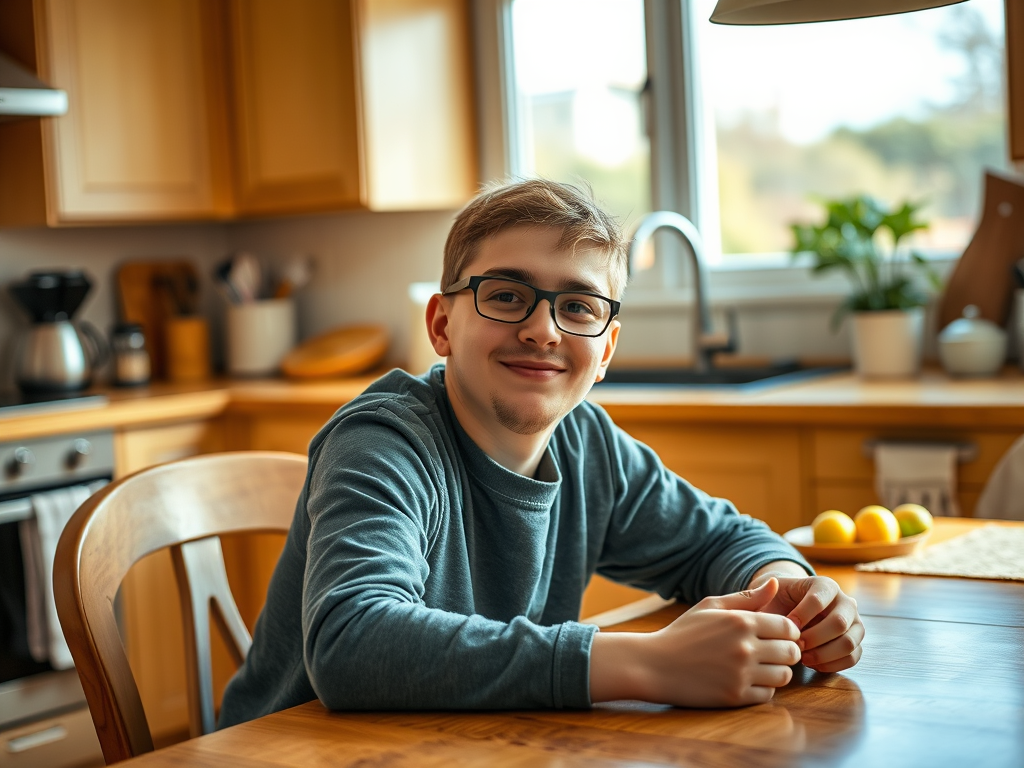
Becoming a sponsored residential sponsor is rarely just a career choice — it’s a calling that grows from the heart. For many families, the journey begins with a desire to create stability, dignity, and belonging for someone with a disability. It starts with learning: understanding HCBS values, human rights, person-centered planning, and the responsibilities that come with opening your home. There are trainings to complete, background checks, home safety reviews, and thoughtful conversations about readiness. But beyond the paperwork and policies, it’s really about preparing your home — and your heart — to provide consistency, compassion, and respectful support.
As the process unfolds, sponsors often discover that they are building more than a service model — they are building a partnership. You work closely with Happy Home, support coordinators, and families to ensure each individual’s goals, preferences, and rights are honored. There will be moments of growth, challenge, laughter, and deep connection. Becoming a sponsor means committing to advocacy, patience, and person-centered care every day. It is a journey rooted in service, strengthened by community, and sustained by the belief that everyone deserves to live in a home where they feel safe, valued, and truly known.
Steps for Your Journey
There are several steps to go through in order to become a sponsor and to remain in compliance with DBHDS. This list can seem overwhelming but Happy Home will help you through every step.
Please note these regulations are also for individuals who bring non family adult’s with intellectual disabilities into their home. They were created to keep vulnerable adults safe and can seem redundant to families who have been caring for their adult children their entire lives but they are truly necessary.
Home Study: An authorized representative from Happy Home will come to your home. We want to meet you and your child and see the home environment. We will help determine what requirements will need to be met in order to comply with DBHDS.
Resume: Each sponsor and back up person will need to either submit a resume or fill out an application HERE. We will also need three references. Letters should contain: person’s relationship is to the sponsor (references from immediate family are discouraged), the length of the relationship, the skills, ability and attitude observed in the person’s work, and a statement of recommendation as to the person’s ability to provide quality human services. Both resumes and letters should be emailed to Happyhomewh@gmail.com
Background Checks: Each person over 18 and living in the home, DSP’s, Sponsors, Back-up personnel must all have background checks through Fieldprint (National Criminal Background) and the Central Registry Check through Virginia Department of Social Services. We will assist you in making appointments and submitting requests.
Driving Records: Each person responsible for transporting the resident will have driving records checked through the DMV. Requests can be made by clicking HERE
Certificate of Occupancy: If you do not already have this, your local county inspectors department can provide you with a copy via email. Albemarle County can access the website HERE
Floor Plan: Happy Home will need a floor plan with dimensions of the home along with two evacuation routes.
Evidence of Financial Resources: Happy Home will assist you in creating a budget. Once the budget is made we will need evidence of the ability to operate for 90 days that can include: line of credit, credit card availability, loans. Retirement accounts are acceptable if they may be accessed for withdrawal.
Insurance: Evidence of homeowners and automobile insurance is required. You will also need to obtain professional insurance which Happy Home will assist you. Even when a sponsor is caring for their own child, sponsored residential services are considered a professional service, not informal family care. Once services are provided under a licensed provider and funded through public programs, the sponsor is acting in a dual role: parent and sponsored residential provider.
Agreement: We will have an annual signed agreement between you and Happy Home. This agreement will cover responsibilities, scope of service, payment agreement, and more.
Parent/Family Sponsors : Two letters of recommendation are required from professionals (i.e. doctor, psychiatrist, etc) who have worked with the family and feel it is in the best interest of the individual to remain in your care. The case manager from your local CSB will need to submit a copy of the Family Members as Sponsor Provider Supporting Documentation Form to justify the parent/family member as the most appropriate provider.
TB Testing: Tuberculosis (TB) Test – A record of TB evaluation on each family member and service provider must be completed.
Back Up Person: Each sponsor must have a back up person who undergoes the same process with you. Sponsored residential services are delivered in private homes, not staffed facilities. Because of that, the state must ensure there is always a responsible, approved adult available to support the individual if the primary sponsor is unexpectedly unavailable.
Lease: A signed lease agreement between the sponsor and resident is a requirement of law. Happy Home will assist you.
Emergency Preparedness: Happy Home will work with you to develop an emergency preparedness plan for your home with its specific, unique needs. Quarterly emergency drills are up to the sponsor to execute quarterly..
Monthly visits: Happy Home will stop by once a month to touch base, offer support, and make sure there is time to answer any questions or concerns. We do this for support and to remain in compliance with licensing DBHDS. We are available for all questions and to hold your hand through the process from becoming a sponsored residential provider to maintaining compliance with DBHDS.
Additional Training: DBHDS requires specific training for our sponsored residential sponsors. These trainings are a hybrid of online and in person and include topics such as Emergency Preparedness, Serious Incident Reporting, Abuse, Neglect, and Exploitation, Infection Control, Human Rights.
Training from outside agency: Sponsors are required to be trained in CPR / First Aid through the Red Cross (hands on). Class must include the in person portion to be fully compliant. You can find class schedules by clicking HERE. If medication is administered there is a 32 hour Med-Aid training course that needs completion. Happy Home utilizes Health Care Training Solutions and an on line course is available HERE. Additionally, if your child has a g-tube there is a six hour course which is partially on line and partially in person.
Documentation: Sponsors are responsible for entering daily progress notes into the system daily. These notes are streamlined and take 5 to 10 minutes to complete.
Quarterly Training and Development: Sponsors will need to create quarterly training done through the internet. These trainings will cover topics helpful to providing care for your child.
 Happy Home Sponsored Residential Services